
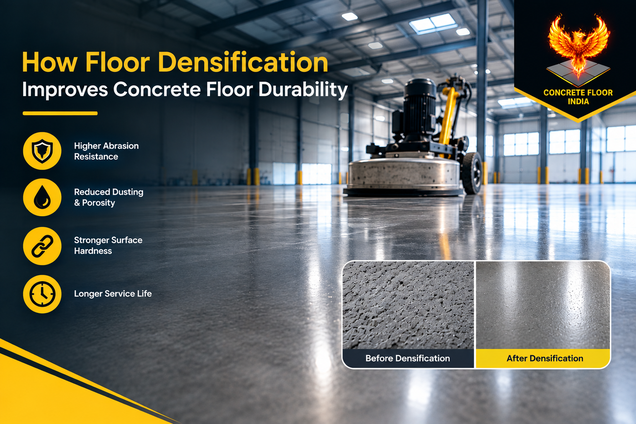
Concrete floors are widely used in warehouses, factories, shopping malls, offices, parking garages, and even modern homes. But untreated concrete is naturally really porous, which means it can absorb water and chemicals. With time, this can lead to dusting and stains. This is exactly where floor densification plays a very important role. Floor densification is a treatment that strengthens the surface of your concrete, making it harder and more durable. Instead of simply applying a protective coating on top of a concrete densifier, it penetrates the surface and improves the concrete from within.
What is floor densification?
Floor densification is actually the process of applying concrete densifiers to concrete floors. A densifier is basically a liquid chemical solution that reacts with the free lime present inside the concrete. The chemical reaction forms additional calcium silicate, the same form responsible for giving concrete its strength. As a result, you can say that concrete becomes denser and more resistant to wear and damage.
Without densification, concrete floors may experience:
- Surface dusting
- Abrasion from heavy foot traffic
- Damage from forklifts and machinery
- Water absorption
- Chemical penetration
- Oil stains
- Surface erosion
- Faster wear and tear
Densification helps solve these problems by making the surface stronger and less porous.
How Does Floor Densification Work?
The process is based on a simple chemical reaction. When the densifier is applied to the concrete surface, it penetrates deep into the pores. Inside the concrete, it reacts with free calcium hydroxide produced during the curing process. The reaction creates additional calcium silicate hydrate, which fills the pores and strengthens the internal structure of the concrete. As the pores become smaller and denser, the floor becomes harder and more durable.
Benefits of low densification
One of the best parts of densification is improved surface hardness. Concrete floors are constantly exposed to foot traffic and vehicle movement. With time, these activities wear down untreated concrete. Abrasion occurs when repeated friction slowly removes the surface layer of concrete. In places like warehouses and manufacturing units, constant movement of people and vehicles can quickly wear down your untreated floors.
Concrete dust is a common problem in older or untreated floors. Tiny particles gradually break away from the surface, creating dust that affects cleanliness and indoor air quality. It is especially important in facilities where cleanliness is essential, like food processing units or hospitals. Untreated concrete floors absorb water more easily because of their porous structure. Excessive moisture can lead to surface damage and staining. A densified concrete floor has fewer open pores, making it more resistant to water penetration. Even though densification does not completely waterproof concrete, it can greatly reduce moisture absorption
Floor Densification vs. Floor Coating
| Floor Densification | Floor Coating |
| Penetrates into the concrete | Sits on the surface |
| Strengthens from within | Provides surface protection |
| Does not peel or chip | May peel, crack, or wear over time |
| Low maintenance | May require reapplication |
| Long-lasting solution | Requires periodic maintenance |
So, above all, you need to know that floor densification is one of the most effective ways to improve the durability, strength, and performance of your concrete floors. By penetrating deep into the concrete and strengthening it from within, densifiers create a harder and denser surface that resists abrasion and dust.
Also Read : Importance of Water Curing in Concrete Floors & Common Mistakes
- By: chawla.durapro@gmail.com" >chawla.durapro@gmail.com
- Tags: concete floor, floor coating, floor densification, FM2 Flooring, laser screed
- Category: Blogs
- 0 comment