
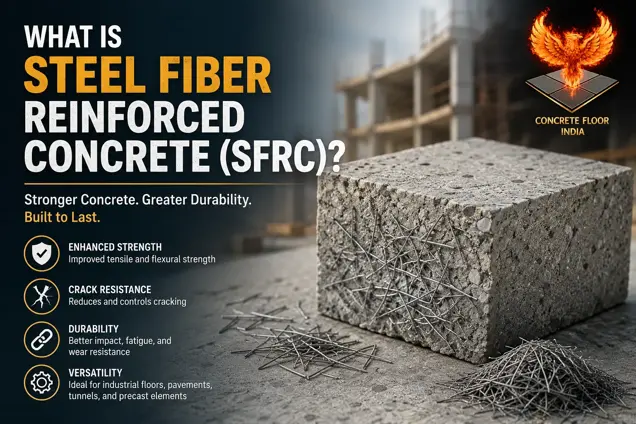
Steel fiber-reinforced concrete is an advanced construction material that is widely used today. The traditional concrete mix is mixed with steel fibres. These fibers can enhance the durability and structural properties substantially. SFRC has a better stress distribution ability compared with conventional concrete. This material helps to fill the cracks and enhance the load-bearing strength. Steel Fiber Reinforced Concrete is preferred by engineers for demanding projects. It has good performance under heavy industrial loading conditions. The material is also much more flexible and impact-resistant. Typical applications of SFRC include tunnels, pavements, bridges, airports, and industrial flooring systems. It is durable and has a low maintenance requirement, which enhances the construction efficiency in the long run.
Features and Benefits of Steel Fiber Reinforced Concrete
Steel fibre-reinforced concrete offers an effective way to enhance the durability and crack resistance of concrete structures. This material has been successfully exhibited to deliver the flexibility and long-term properties.
Improved Crack Resistance
Steel fibers reduce shrinkage. This, in turn, reduces surface cracking to a great extent. Fibers distribute structural stress in a uniform way throughout concrete mixtures. This improves durability. It also minimizes structural damage risks significantly. Reduced cracking also increases long-term construction reliability.
Higher Tensile and Flexural Strength
Concrete traditionally has a naturally low tensile strength. The reinforcement provided by SFRC can also greatly affect the tensile and flexural properties. The presence of steel fibres increases the load-bearing capacity of structural strength. This helps to make the structure in question much safer and more resistant to building over the years.
Better Impact Resistance
The energy-absorbing capacity of steel fibre-reinforced concrete is better. It is resistant to repeated loading stresses without significant damage. This product has a significant positive effect on industrial floorings and projects involving transportation infrastructure. SFRC materials last long on heavy-duty applications.
Reduced Maintenance Requirements
Regular repair work on structures constructed with SFRC is less than usual. The strength of crack resistance prevents water from penetrating and the structures from deteriorating effectively. Because of the necessary reduction in maintenance, the operational efficiency and longevity of a project are greatly increased. Construction owners’ long-term repair costs are also much lower.
Enhanced Durability in Harsh Conditions
Steel fiber-reinforced concrete is effective in harsh environments under all circumstances. This material is quite resistant to the effects of abrasion, corrosion, and temperature stresses. Extending the structural life of industrial and infrastructural applications is greatly enhanced. The influence of severe environmental exposure on SFRC structures is relatively small.
Faster and Cost-Effective Construction
The use of SFRC makes the placement of reinforcement easier in the construction process. This saves a lot of manpower and time for the completion of projects. Success is achieved by being able to build sooner and with a more efficient use of resources in both the operational and economic performances of a project. The lowered maintenance costs also make a major difference in enforcing the value of a building over the long haul.
SFRC: Revolution in the Construction Industry
SFRC has revolutionized the construction industry to a great extent. This material will enhance strength, durability, and crack resistance effectively. SFRC has been used as a popular cement by engineers in industrial and infrastructure projects. It provides greater flexibility and impact resistance, which are significant improvements in the performance of structures. In addition, lower maintenance needs lead to higher efficiencies in the project over the long haul. Steel fiber-reinforced concrete can effectively withstand severe environmental and load conditions. It is used in construction around the world for better durability, strength, and safety. The advent of new and long-lasting infrastructure projects in various industries around the world will continue to make SFRC highly demanded in the future.
Also Read:
- By: chawla.durapro@gmail.com" >chawla.durapro@gmail.com
- Category: Blogs
- 1 comment