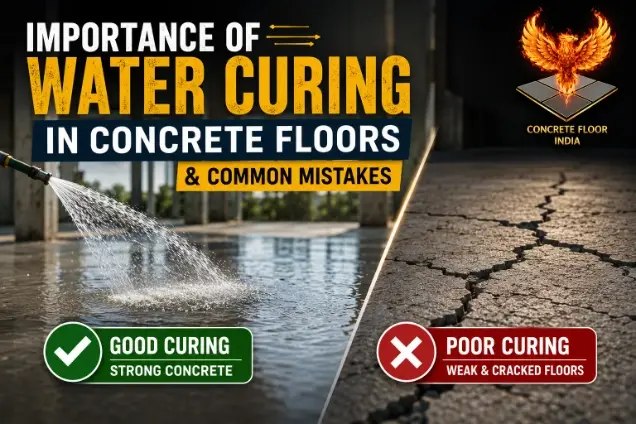
Concrete floors need water curing. That is why the strength and integrity of the floor are preserved. When water curing in concrete floors is done, it gets to hydrate perfectly, making the concrete harder and stronger, also preventing cracks. But when you omit this step, you make weak concrete surfaces, so you spend time and money on labor work, and the structure itself will break apart later.
Benefits of Water Curing for Concrete Floors
Water curing in concrete floors maintains water which promotes hydration of the concrete and develops the floor as an entity.
Prevention of Surface Cracks
Water curing helps maintain consistent concrete moisture levels, thus reducing instabilities in the concrete surface during the concrete’s initial setting phase.
● Reduces shrinkage.
● Avoids incipient cracking.
● Keeps sufficient water content.
● Makes the surface flat and smooth.
Increased Strength of Concrete
Continuous water curing enables thorough concrete hydration, ensuring optimal concrete strength and structural performance.
● Increases bearing load capacity.
● Improves internal binding.
● Optimizes the rate of strength gain.
● Prolongs the structural durability.
Wear Resistance Improvement
The surface of properly water-cured concrete gets denser, and therefore, water curing in concrete floors is an effective measure for ensuring adequate resistance against wear and tear.
● Reduces the tendency of the concrete surface to dust.
● Makes the floor resistant to heavy foot traffic.
● Decreases damage from abrasion.
● Increases the lifetime performance of the concrete floor.
Enhanced Durability and Performance Over time
Water curing in concrete floors keeps the quality of the concrete intact, leading to a decrease in maintenance efforts.
● Improves weather resistance.
● Minimizes the repairing amount.
● Keep surface quality.
● Ensures durability for the entire duration of the floor’s use.
Mistakes to Avoid in Water Curing
Poor execution of water curing in concrete floors negatively impacts concrete quality and leads to future structural problems.
● Beginning Curing Later than Usual
Late initiation of water curing can result in too rapid evaporation of moisture. This leads to hindering complete hydration of concrete and making it susceptible to weaknesses and cracking.
This can result in prematurely dry concrete, weaker concrete surfaces and surface cracks, and affect the overall concrete quality.
● Cessation of Curing Earlier Than Required
Stopping curing before intended is when there is not enough hydration to produce an adequately durable and strong floor that is unlikely to be subject to future attack.
This can lead to limitations in the rate of strength gain. There will be need for future maintenance. The surface hardness decreases and results in overall service life reduction.
● Uneven Water Distribution
Uneven application of water in concrete surfaces can result in uneven curing of the concrete floor, weakening certain spots and affecting the floor’s overall strength and appearance.
This leads to uneven hydration across the surface, weaker patches in concrete and floor appearance issues and reduced durability.
● Disregard of Environmental Factors
Temperature and wind conditions are critical and should be considered for a successful water curing of concrete floors.
High temperatures will lead to faster evaporation of water and lower durability and strength of concrete. Wind leads to moisture loss faster than with water curing of concrete floors. Cold temperatures may delay the hydration process.
Build Stronger Floors with Proper Water Curing
The perfect use of water curing in concrete floors provides floors that are strong, resistant to cracking and will last for a lot of time by giving it an excellent performance. Avoiding the typical concrete curing mistakes will save you labor costs and give the structure durability in the future.
Also Read: VDF full form in Concrete flooring- Benefits, Specifications
- By: chawla.durapro@gmail.com" >chawla.durapro@gmail.com
- Tags: water curing in concrete floors
- Category: Blogs
- 0 comment
Leave a Reply